
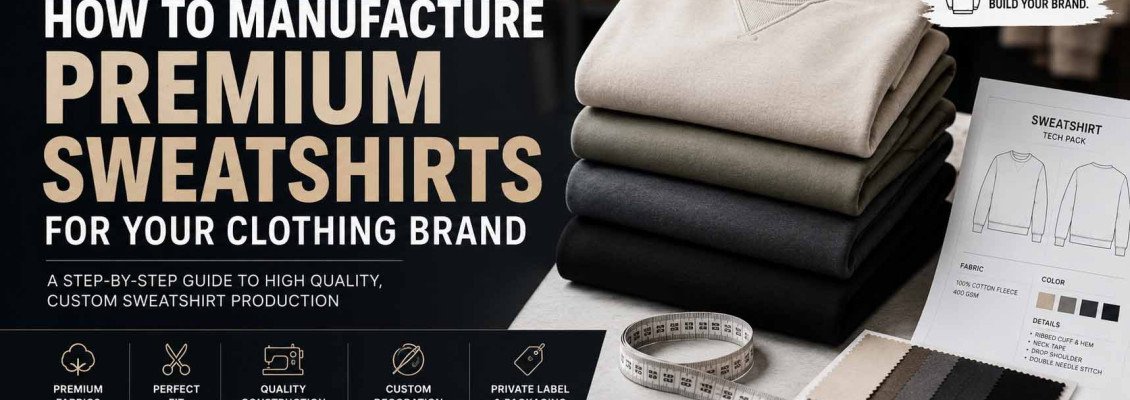
How to Manufacture Premium Sweatshirts for Your Clothing Brand
Launching a premium clothing brand requires much more than creating an attractive logo or choosing trendy colors. One of the biggest factors that determines customer satisfaction is garment quality, and premium sweatshirts have become one of the most profitable products for modern streetwear, lifestyle, gym, and fashion brands.
Whether you're building your first collection or expanding an existing apparel line, understanding the sweatshirt manufacturing process will help you avoid costly mistakes and produce garments your customers will love.
This guide explains everything you need to know about manufacturing premium sweatshirts, from selecting fabrics to private labeling and quality control.
Why Premium Sweatshirts Continue to Dominate the Fashion Industry
Premium sweatshirts are no longer seasonal products.
Consumers now wear heavyweight sweatshirts throughout the year because they offer comfort, durability, and timeless style. Streetwear brands, luxury labels, fitness companies, universities, corporate brands, and influencers all rely on premium-quality sweatshirts to strengthen their collections.
Some of the fastest-growing markets include:
Luxury streetwear
Fitness apparel
Lifestyle brands
University merchandise
Corporate apparel
Premium basics
Fashion startups
Investing in premium construction helps brands increase customer retention while reducing product returns.
Step 1: Choose the Right Sweatshirt Fabric
Fabric is the foundation of every premium sweatshirt.
Cotton Fleece
Cotton fleece offers exceptional softness, warmth, and comfort.
Best for:
Luxury brands
Streetwear
Winter collections
Recommended GSM:
320 GSM
350 GSM
400 GSM
450 GSM
French Terry
French Terry provides excellent breathability while maintaining structure.
Ideal for:
Spring collections
Gym apparel
Premium casual wear
Recommended GSM:
280–380 GSM
Cotton Polyester Blend
Many premium brands choose cotton-poly blends because they combine softness with durability.
Common blends include:
80% Cotton / 20% Polyester
70% Cotton / 30% Polyester
60% Cotton / 40% Polyester
Benefits include:
Better shape retention
Less shrinkage
Improved durability
Lower pilling
Step 2: Select the Correct Fabric Weight (GSM)
The fabric weight significantly affects the look and feel of a sweatshirt.
GSM Best For
280 GSM Lightweight casual sweatshirts
320 GSM Premium everyday wear
350 GSM Luxury streetwear
400 GSM Heavyweight premium collections
450+ GSM Ultra heavyweight fashion brands
Heavyweight sweatshirts continue to gain popularity because customers associate weight with premium quality.
Step 3: Develop the Perfect Fit
Fit is one of the biggest reasons customers purchase premium apparel.
Oversized Fit
Most popular for:
Streetwear
Luxury brands
Influencer merchandise
Features:
Dropped shoulders
Relaxed body
Wide sleeves
Longer cuffs
Regular Fit
Perfect for:
Corporate clothing
University apparel
Everyday basics
Boxy Fit
Ideal for:
Premium fashion labels
Contemporary streetwear
Luxury collections
Step 4: Select Premium Construction Methods
High-quality construction separates premium garments from budget alternatives.
Reinforced Shoulder Seams
Prevents stretching.
Double Needle Stitching
Improves durability while creating a cleaner finish.
Ribbed Cuffs and Waistband
Premium rib provides:
Better recovery
Improved fit
Longer garment life
Neck Tape
Neck tape increases comfort while reinforcing the neckline.
Step 5: Choose Premium Decoration Methods
Decoration transforms a blank sweatshirt into a branded product.
Screen Printing
Best for:
Large quantities
Bold graphics
Streetwear
Puff Printing
Perfect for:
Premium logos
Raised graphics
Luxury branding
Embroidery
Ideal for:
Luxury branding
Minimal logos
Premium collections
DTG Printing
Suitable for:
Small runs
Detailed artwork
Sampling
Chenille Patches
Excellent for:
Varsity apparel
College collections
Fashion brands
Step 6: Add Premium Private Label Branding
Private labeling creates a professional appearance.
Woven Neck Labels
Provide a premium finish.
Printed Neck Labels
Comfortable and cost-effective.
Care Labels
Include:
Washing instructions
Fabric composition
Country of origin
Size
Hang Tags
High-quality hang tags increase perceived value.
Custom Packaging
Popular options include:
Zip bags
Frosted bags
Recycled polybags
Custom boxes
Step 7: Create a Professional Tech Pack
A detailed tech pack reduces production errors.
Include:
CAD drawings
Measurements
Stitching details
Pantone colors
Fabric specifications
Branding placements
Artwork files
Label placement
Packaging requirements
A complete tech pack allows manufacturers to quote accurately and produce consistent results.
Step 8: Produce a Sample Before Bulk Manufacturing
Sampling is one of the most important stages.
During sample approval, evaluate:
Fabric quality
Fit
Stitching
Printing
Embroidery
Measurements
Shrinkage
Color accuracy
Comfort
Never skip the sampling stage before placing bulk orders.
Step 9: Quality Control During Production
Professional manufacturers inspect garments throughout production.
Quality checks include:
Fabric inspection
Stitch consistency
Measurement tolerance
Logo placement
Label accuracy
Packaging inspection
Needle detection (when required)
Consistent quality control minimizes defects and customer complaints.
Common Mistakes Clothing Brands Should Avoid
Choosing Price Over Quality
Cheap fabrics often result in poor customer reviews.
Ignoring Fabric Testing
Always test shrinkage and color fastness.
Poor Fit Development
A premium fabric cannot compensate for poor garment fit.
Using Low-Quality Labels
Branding details strongly influence perceived quality.
Skipping Sample Approval
Small issues become expensive during mass production.
Why Work with an Experienced Sweatshirt Manufacturer?
A reliable custom sweatshirt manufacturer helps you:
Source premium fabrics
Develop accurate patterns
Produce high-quality samples
Offer custom printing and embroidery
Create private labels
Maintain strict quality standards
Scale production efficiently
Working with an experienced OEM sweatshirt manufacturer can significantly reduce development time and improve consistency across every production run.
Related Reading
To learn more about private label production, read our Custom Sweatshirt Manufacturer: Complete Private Label Guide (2026).
Frequently Asked Questions
What fabric is best for premium sweatshirts?
Heavyweight cotton fleece between 320 and 400 GSM is one of the most popular choices for premium streetwear and lifestyle brands due to its softness, durability, and structure.
What is the ideal GSM for premium sweatshirts?
Most premium brands choose 320–400 GSM. Luxury heavyweight collections may use fabrics above 450 GSM.
Can I add my own branding?
Yes. Most private label manufacturers offer custom neck labels, care labels, woven labels, hang tags, embroidery, printing, and custom packaging.
What is the minimum order quantity?
The MOQ varies by manufacturer, but many private label sweatshirt manufacturers start from 50 pieces per style, depending on the fabric and customization requirements.
Should I make a sample before bulk production?
Absolutely. Sampling helps verify fit, fabric, branding, construction, and overall quality before committing to mass production.
Ready to Manufacture Premium Sweatshirts?
Whether you're launching a startup clothing brand or expanding an established collection, choosing the right manufacturing partner is essential for creating premium garments that customers trust.
At Brand Stuff, we specialize in custom sweatshirt manufacturing, private label production, premium heavyweight fabrics, embroidery, screen printing, puff printing, woven labels, and custom packaging for fashion brands worldwide.
Contact our team today to discuss your project, request a quotation, or start developing your premium sweatshirt collection with confidence.
Leave a Comment