
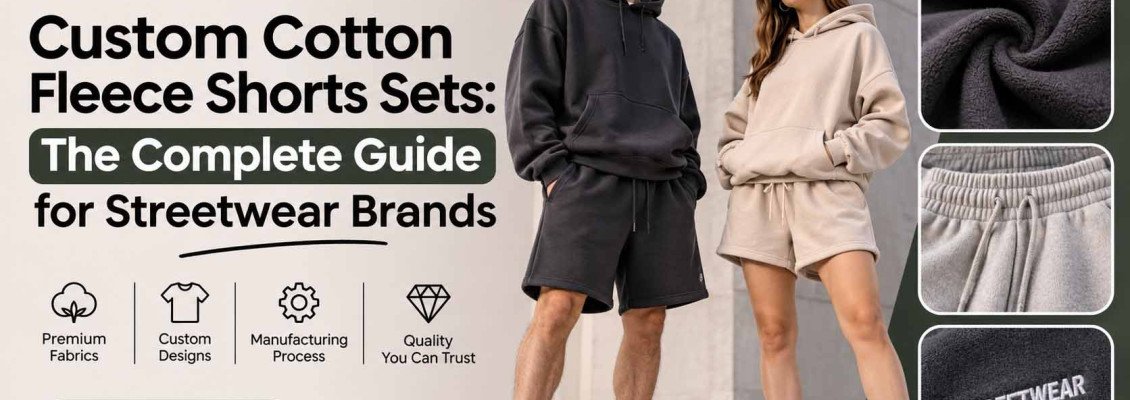
Custom Cotton Fleece Shorts Sets: The Complete Guide for Streetwear Brands
Custom cotton fleece shorts sets are becoming an essential part of modern streetwear, casual fashion, and private-label apparel collections. From oversized sweatshorts paired with matching hoodies to coordinated sweatshirt and shorts combinations, these sets offer clothing brands an opportunity to create comfortable, premium-looking products with consistent branding.
For streetwear startups, fashion entrepreneurs, and established apparel labels, developing custom cotton fleece shorts sets involves more than selecting a fabric and matching two garments. Fabric composition, GSM, pattern making, sizing, shrinkage control, stitching, branding, and finishing all influence the final product.
Whether you are launching your first streetwear collection or expanding an existing clothing line, choosing the right custom fleece shorts manufacturer can make a significant difference in product quality and customer satisfaction.
At Brand Stuff, we specialize in custom cut-and-sew apparel manufacturing, helping international clothing brands develop private-label hoodies, sweatshirts, shorts, joggers, tracksuits, and coordinated apparel collections.
In this complete guide, we explain how to select fabrics, determine GSM, develop matching sets, customize garment details, understand manufacturing costs, and prepare your designs for bulk production.
What Are Custom Cotton Fleece Shorts Sets?
Custom cotton fleece shorts sets are coordinated apparel combinations manufactured using cotton fleece or cotton-rich knitted fabrics. These collections generally include custom sweatshorts paired with a matching hoodie, sweatshirt, or complementary top.
Unlike ready-made clothing sets, custom-manufactured collections allow brands to control fabric composition, garment weight, measurements, colors, design details, branding, and packaging.
Popular combinations include:
Matching hoodie and cotton fleece shorts.
Crewneck sweatshirt and sweatshorts.
Oversized sweatshirt and relaxed-fit shorts.
Zip-up hoodie and heavyweight fleece shorts.
Graphic T-shirt and cotton shorts.
Premium lounge sets with coordinated branding.
Why Are Matching Shorts Sets Popular in Streetwear?
Streetwear customers increasingly look for comfortable clothing that combines everyday functionality with distinctive designs.
Matching fleece sets provide a coordinated appearance while allowing customers to wear each garment separately.
For clothing brands, they also create opportunities to develop complete collections instead of selling individual products.
Benefits of Matching Shorts Sets for Clothing Brands
Consistent branding: Matching colors, logos, embroidery, and labels create a recognizable collection.
Higher product variety: One fabric concept can be developed into several coordinated garments.
Flexible styling: Customers can wear the hoodie and shorts together or separately.
Premium positioning: Heavyweight fabrics and custom construction can support a premium retail identity.
Collection expansion: Existing hoodie designs can be extended into matching shorts and other apparel products.
Why Private-Label Sets Make Commercial Sense
Instead of relying entirely on generic ready-made garments, brands can develop products around their own identity.
Custom patterns, fabric specifications, logo placement, woven labels, care labels, and branded packaging help create a distinctive product range.
Building a Recognizable Apparel Collection
A successful collection should maintain consistency across all garments. Matching fabric, color shades, logo treatments, and finishing details help create a unified appearance that customers can recognize.
Choosing the Right Fabric for Custom Cotton Fleece Shorts Sets
Fabric selection is one of the most important decisions when developing custom fleece shorts.
The fabric determines the garment's weight, softness, structure, breathability, durability, and overall appearance.
Although several knitted fabrics can be used for shorts manufacturing, cotton fleece and French terry are particularly popular for streetwear and casualwear collections.
1. Cotton Brushed Fleece
Cotton brushed fleece features a smooth outer surface and a brushed interior that creates a soft, warm texture.
It is commonly used for hoodies, sweatshirts, joggers, and heavyweight sweatshorts.
Advantages:
Soft interior texture.
Comfortable feel against the skin.
Suitable for premium casualwear.
Good structure for relaxed and oversized silhouettes.
Suitable for matching hoodie and shorts collections.
2. Cotton French Terry
French terry has a smooth outer surface and characteristic looped construction on the inside.
Unlike brushed fleece, its interior loops are not raised through brushing.
This construction makes French terry a versatile option for brands looking for comfortable shorts with a relatively lighter and more breathable feel.
Advantages:
Comfortable everyday wear.
Smooth exterior for printing and embroidery.
Suitable for spring and summer collections.
Available in different weight options.
Versatile styling for casual and streetwear products.
3. Cotton-Polyester Fleece Blends
Cotton-polyester fleece combines cotton with polyester fibers to achieve different combinations of softness, durability, shape retention, and production cost.
Common compositions include:
80% cotton / 20% polyester.
65% cotton / 35% polyester.
50% cotton / 50% polyester.
The best composition depends on the brand's target market, desired hand feel, garment performance, and budget.
4. 100% Cotton Fleece
Brands looking for a cotton-focused product can consider 100% cotton fleece.
This option provides a natural cotton hand feel and can be suitable for premium casualwear and streetwear collections.
However, proper fabric processing and shrinkage testing are important when developing 100% cotton garments.
Cotton Fleece vs. French Terry: Which Is Better?
Feature Brushed Cotton Fleece French Terry
Interior Brushed and soft Looped
Warmth Generally warmer Generally lighter
Hand feel Plush and soft Smooth and comfortable
Structure Depends on GSM Depends on GSM
Best application Premium sweat sets Versatile casual sets
Seasonal use Cooler conditions Year-round options
The right selection depends on the intended product, climate, retail positioning, and customer preferences.
Related reading: Cotton Fleece Shorts Manufacturer for Private Label Streetwear Brands.
What GSM Is Best for Custom Cotton Fleece Shorts?
GSM stands for grams per square meter. It measures the weight of a fabric and helps clothing brands specify its thickness and overall weight.
Choosing the correct GSM is particularly important when manufacturing heavyweight streetwear shorts.
A heavier fabric can provide a more substantial hand feel, but higher GSM does not automatically mean better quality.
Fabric construction, yarn quality, fiber composition, finishing, and shrinkage performance also matter.
Recommended GSM for Cotton Fleece Shorts
240–280 GSM: Lightweight Shorts
This range can work for lightweight casual shorts and warmer-weather collections.
Suitable applications include:
Summer lounge shorts.
Lightweight casualwear.
Relaxed everyday shorts.
Lightweight matching apparel sets.
280–340 GSM: Midweight Shorts
Midweight cotton fleece and French terry can offer a balance between comfort, structure, and versatility.
This range can be suitable for brands developing everyday streetwear and casual collections.
340–400 GSM: Heavyweight Streetwear Shorts
This range is suitable for brands looking for more substantial shorts with a premium hand feel.
Potential applications include:
Oversized streetwear shorts.
Premium matching hoodie sets.
Heavyweight casualwear.
Relaxed-fit sweatshorts.
400–450+ GSM: Premium Heavyweight Shorts
For brands targeting heavyweight streetwear collections, fabrics in this range can create a substantial appearance and feel.
However, the pattern, waistband, pocket construction, and overall garment proportions must be developed appropriately to accommodate heavier material.
Does Higher GSM Always Mean Better Fabric Quality?
No. GSM is only one part of fabric quality.
Two fabrics with the same GSM can feel completely different because of differences in yarn, knitting construction, fiber composition, and finishing.
What Should Brands Check Besides GSM?
Before approving a fabric, consider:
Fiber composition.
Fabric surface and interior texture.
Color consistency.
Stretch and recovery.
Shrinkage performance.
Pilling resistance.
Fabric width and weight consistency.
Comfort and overall hand feel.
Why Fabric Testing Is Important
Testing helps brands identify possible fabric issues before bulk production.
Important Fabric Testing Points
Check shrinkage, colorfastness, pilling resistance, fabric weight, and dimensional stability according to the intended product requirements.
How to Design Custom Cotton Fleece Shorts for Streetwear Brands
A successful custom shorts collection starts with a clear product specification.
Before manufacturing, brands should decide the silhouette, measurements, fabric, waistband, pockets, branding, and finishing details.
1. Select the Right Shorts Fit
The fit determines how the shorts look and feel when worn.
Different streetwear brands prefer different silhouettes depending on their target customers and collection concepts.
Regular-Fit Cotton Fleece Shorts
Regular-fit shorts provide a balanced silhouette with comfortable room around the hips and thighs.
They work well for everyday casualwear and versatile apparel collections.
Relaxed-Fit Sweatshorts
Relaxed-fit shorts provide additional room through the legs without becoming excessively oversized.
They are suitable for lifestyle collections and contemporary casualwear.
Oversized Streetwear Shorts
Oversized shorts are popular in modern streetwear collections.
They typically feature wider leg openings, additional room through the thighs, and carefully balanced proportions.
For accurate results, manufacturers should develop a dedicated oversized pattern rather than simply increasing every measurement of a regular-fit garment.
Long-Length Cotton Fleece Shorts
Longer shorts can create a relaxed, contemporary streetwear appearance.
Brands can specify the inseam, outseam, rise, and leg opening according to their desired silhouette.
Short-Length Sweatshorts
Shorter silhouettes are suitable for summer collections, casualwear, and lifestyle apparel.
They can be developed with different waistband constructions, pocket styles, and branding options.
2. Choose the Waistband Construction
The waistband plays an important role in comfort, appearance, and garment fit.
Popular waistband options include:
Elasticated waistband.
Wide elastic waistband.
Elastic waistband with external drawcord.
Elastic waistband with internal drawcord.
Custom waistband with branded detailing.
Drawcord Customization
Drawcords can be customized using different materials and finishing options.
Available design details may include:
Flat cotton drawcords.
Round polyester drawcords.
Matching fabric drawcords.
Contrast-color drawcords.
Metal or custom-finished drawcord tips.
3. Select Pocket Styles
Pocket construction affects both the functionality and appearance of custom sweatshorts.
Popular options include:
Standard side-seam pockets.
Slanted front pockets.
Deep utility pockets.
Back patch pockets.
Welt pockets.
Zippered pockets.
For premium streetwear shorts, pocket placement and construction should be clearly defined in the technical specifications.
4. Decide the Hem and Finishing Details
The bottom hem contributes to the final appearance of the shorts.
Common options include:
Standard double-needle hem.
Coverstitch hem.
Clean folded hem.
Raw-edge finishing for selected designs.
Ribbed hem for specialized styles.
Customization and Branding Options for Private-Label Shorts Sets
Branding is what transforms a basic cotton fleece garment into a recognizable private-label product.
Streetwear brands can customize their shorts and matching tops using different printing, embroidery, and labeling techniques.
1. Screen Printing
Screen printing is suitable for bold graphics, logos, and larger artwork.
It is commonly used for streetwear designs requiring consistent colors and clear graphic details.
2. DTF Printing
Direct-to-film printing allows brands to reproduce detailed artwork and multiple colors.
It can be useful for custom graphics, small logos, and designs with several visual elements.
3. DTG Printing
Direct-to-garment printing applies artwork directly onto compatible garment surfaces.
It can be suitable for detailed designs and certain short-run custom apparel projects.
4. Puff Printing
Puff printing creates a raised appearance by expanding the printing material during curing.
It is particularly popular for streetwear logos and bold typography.
5. Custom Embroidery
Embroidery provides a stitched finish that can create a premium appearance.
Popular applications include:
Small embroidered thigh logos.
Front-leg branding.
Back-pocket embroidery.
Matching chest and shorts logos.
Custom embroidered lettering.
6. Woven Labels and Private-Label Trims
Labels help create a professional branded product.
Common options include:
Main neck labels.
Woven hem labels.
Side-seam labels.
Size labels.
Printed care labels.
Branded hang tags.
7. Custom Packaging
Brands can also customize the presentation of their collections with:
Branded zipper bags.
Custom polybags.
Printed stickers.
Hang tags.
Branded packaging inserts.
For a consistent collection, the branding and finishing details should be coordinated across both the shorts and the matching top.
How to Manufacture Matching Cotton Fleece Hoodie and Shorts Sets
Manufacturing matching sets requires coordination between the top and bottom garments.
Even when both pieces use similar fabrics, differences in color, GSM, finishing, or shrinkage can affect the final appearance.
Step 1: Develop the Collection Concept
Start by deciding the overall design direction.
Determine whether your collection will include:
Oversized hoodies and matching shorts.
Crewneck sweatshirts and shorts.
Zip-up hoodies and sweatshorts.
Minimalist logo sets.
Graphic streetwear sets.
Premium heavyweight lounge sets.
Step 2: Select Matching Fabrics
Whenever possible, use the same fabric specification and compatible dye lot for both garments.
This helps maintain consistency in fabric weight, color shade, surface texture, interior finish, and overall hand feel.
Step 3: Prepare Separate Garment Patterns
Hoodies and shorts require different pattern structures.
The hoodie pattern should define shoulder width, chest, body length, sleeve length, hood dimensions, and ribbing.
The shorts pattern should define waist, hip, rise, inseam, outseam, and leg opening.
Step 4: Coordinate Colors and Branding
Use consistent color references for both garments.
The same logo artwork, embroidery style, print colors, and label design can be applied across the collection.
Step 5: Develop Samples for Approval
A physical sample helps brands evaluate both pieces together.
Check garment fit, fabric hand feel, construction, branding, and color matching before approving bulk production.
Why Fabric Matching Matters
A hoodie and shorts may appear similar in digital mockups but look different in actual production if the fabrics have different surface textures or dye shades.
Same Fabric Specification vs. Same Fabric Batch
Using the same fabric composition and GSM is a useful starting point.
For the closest possible match, brands should also request compatible dyeing and finishing, ideally using fabric from the same production batch where practical.
Final Matching Set Inspection
Before approving the collection, compare both garments under consistent lighting and check:
Color shade.
Fabric weight.
Surface appearance.
Shrinkage behavior.
Logo placement.
Overall garment proportions.
Custom Cotton Fleece Shorts Manufacturing Process: From Design to Bulk Production
Professional cut-and-sew manufacturing involves multiple stages to ensure that finished garments match the approved specifications.
Step 1: Tech Pack and Artwork Review
The manufacturing team reviews the technical package and design references.
Important information includes:
Garment technical drawings.
Fabric composition.
GSM requirements.
Color references.
Size chart.
Logo artwork.
Print and embroidery specifications.
Label and packaging requirements.
Step 2: Fabric Sourcing and Selection
Fabric is selected according to the approved specifications.
The manufacturing team checks composition, weight, texture, color, and suitability for the intended design.
Step 3: Pattern Making and Size Grading
Patterns are developed according to the required garment measurements.
Once the base size is approved, grading can be carried out to develop the remaining sizes.
Step 4: Sample Development
A development sample is produced to evaluate the design, fabric, construction, and overall fit.
Step 5: Sample Review and Corrections
The brand reviews the sample and provides feedback.
Required adjustments may include waistband width, inseam length, leg opening, pocket dimensions, logo size and placement, fabric weight, and stitching.
Step 6: Fabric Relaxation and Cutting
Fabric preparation is important before cutting.
Depending on the fabric and processing requirements, relaxation and appropriate shrinkage-control procedures can help reduce measurement variations.
The approved patterns are then used to cut the garment panels.
Step 7: Sewing and Garment Assembly
The cut panels are assembled using the specified construction methods.
This stage includes waistband attachment, pocket construction, inseam stitching, side seams, hems, and other garment details.
Step 8: Printing and Embroidery
Approved branding and artwork are applied according to the final specifications.
Step 9: Labels and Finishing
Main labels, size labels, care labels, and other approved trims are attached.
Garments are then checked for loose threads, construction issues, and finishing quality.
Step 10: Quality Control
Finished garments are inspected against the approved specifications.
Important inspection points include measurements, stitching, fabric defects, color consistency, logo placement, and overall appearance.
Step 11: Packing and Shipping
After inspection, garments are packed according to the brand's requirements and prepared for shipment.
How to Control Shrinkage in Cotton Fleece Shorts
Shrinkage is an important consideration when manufacturing cotton-based apparel.
Cotton knitted fabrics can change dimensions after washing, depending on their construction, processing, finishing, and laundering conditions.
For streetwear brands, uncontrolled shrinkage can affect waistband measurements, inseam length, garment fit, and matching set consistency.
Common Reasons for Cotton Fabric Shrinkage
Fabric relaxation after knitting.
Inadequate shrinkage control during finishing.
High processing tension.
Washing and drying conditions.
Differences in fabric construction.
Inconsistent production specifications.
How Manufacturers Can Reduce Shrinkage Risks
A suitable shrinkage-control process can include:
Selecting appropriate fabric qualities.
Relaxing fabric before cutting where required.
Using suitable fabric finishing and compaction.
Conducting shrinkage tests.
Checking garment measurements after washing.
Maintaining consistent production procedures.
Why Pre-Production Fabric Testing Matters
Testing fabric before bulk cutting helps identify potential dimensional changes.
For cotton fleece shorts sets, both the hoodie and shorts should be evaluated under consistent washing conditions.
This is particularly important when the two garments are manufactured using different fabric constructions.
How Much Do Custom Cotton Fleece Shorts Sets Cost?
The cost of manufacturing custom cotton fleece shorts sets depends on several factors.
There is no universal price because each brand has different requirements for fabric, garment construction, branding, and order quantity.
1. Fabric Composition and GSM
Higher-quality cotton fleece, heavyweight French terry, and specialized fabric finishes can affect the overall production cost.
2. Order Quantity
Manufacturing quantity influences production planning, material purchasing, and unit cost.
Larger quantities may provide better pricing opportunities because certain setup and production expenses can be distributed across more garments.
3. Garment Construction
Complex patterns, oversized silhouettes, additional panels, specialized pockets, and custom waistband details can increase manufacturing costs.
4. Printing and Embroidery
Branding techniques have different setup and production costs.
For example, embroidery may involve digitizing, thread, machine time, and backing materials, while printing costs depend on artwork, colors, and print dimensions.
5. Private-Label Accessories
Custom woven labels, care labels, hang tags, drawcord tips, and branded packaging can affect the final quotation.
6. Shipping and Delivery Terms
Shipping costs depend on order weight, destination, courier service, and delivery terms.
Brands should compare quotations carefully and confirm whether freight, customs duties, and applicable taxes are included.
How to Request an Accurate Manufacturing Quote
To receive a reliable quotation, provide your manufacturer with:
Product design or technical drawings.
Fabric composition and GSM.
Required colors.
Size breakdown.
Total quantity.
Printing or embroidery details.
Private-label requirements.
Packaging specifications.
Shipping destination.
What MOQ Should Streetwear Brands Expect for Custom Fleece Shorts Sets?
Minimum order quantity (MOQ) refers to the minimum number of garments a manufacturer accepts for a production order.
MOQ requirements vary depending on fabric availability, production methods, colors, and garment specifications.
Why Does MOQ Matter for Startups?
Emerging clothing brands often prefer smaller initial collections because they want to test customer demand before committing to larger production quantities.
A manufacturer offering flexible order quantities can help startups develop their first collection with more manageable inventory commitments.
MOQ Per Style and Color
Brands should clarify whether the manufacturer's MOQ applies per design, per color, or across the entire order.
For example, an order containing black and grey shorts sets may have different production requirements from an order containing only one color.
At Brand Stuff, our standard MOQ is generally 50 pieces per style and color, depending on the product and specifications.
Planning Your First Collection
For a new streetwear label, starting with a focused collection can help simplify production.
Consider developing:
One matching hoodie and shorts design.
Two complementary colorways.
A manageable size range.
One consistent fabric specification.
A limited number of branding techniques.
This approach can help control initial inventory and make product testing easier.
How to Choose the Right Custom Cotton Fleece Shorts Manufacturer
Selecting the right manufacturer is an important part of building a successful clothing brand.
The lowest quotation does not always represent the best manufacturing value.
Brands should evaluate the manufacturer's technical capabilities, production process, quality standards, communication, and experience.
1. Check Manufacturing Capabilities
Look for a manufacturer that can handle the complete cut-and-sew process.
Relevant capabilities include pattern making, fabric sourcing, cutting, stitching, printing, embroidery, finishing, and quality control.
2. Ask About Fabric Options
A professional manufacturer should be able to explain fabric composition, GSM, construction, and finishing options.
3. Review Actual Production Samples
Ask to see actual garments rather than relying exclusively on digital mockups.
Inspect fabric quality, stitching, fit, measurements, and finishing.
4. Confirm Sample Approval Procedures
A reliable production process should allow brands to review and approve samples before bulk manufacturing.
5. Discuss Communication and Production Updates
Clear communication helps avoid misunderstandings about artwork, measurements, colors, and production specifications.
6. Understand Payment and Shipping Terms
Confirm payment schedules, production timelines, shipping costs, and applicable duties before placing an order.
Questions to Ask Before Selecting a Manufacturer
Can you manufacture matching hoodie and shorts sets?
Do you offer 100% cotton and cotton-polyester fleece?
Can you produce heavyweight 400–450 GSM garments?
Can you follow our custom size chart?
Do you provide sample development?
Can you apply embroidery, DTF, screen printing, and puff printing?
Do you offer private-label labels and packaging?
Can you ship internationally?
Why In-House Production Capabilities Matter
When pattern making, cutting, stitching, printing, embroidery, and quality control are coordinated within one manufacturing operation, it can make communication and production management easier.
Look Beyond the Initial Unit Price
The right manufacturing partner should understand your design requirements and help translate them into a consistent finished product.
Why Choose Brand Stuff for Custom Cotton Fleece Shorts Sets?
Brand Stuff is a custom apparel manufacturer based in Sialkot, Pakistan, specializing in cut-and-sew manufacturing for streetwear brands, private-label clothing companies, fashion startups, and wholesale buyers.
Since 2016, we have worked on customized apparel projects involving different fabrics, garment constructions, branding techniques, and finishing requirements.
Our manufacturing capabilities cover the development of coordinated apparel collections, including custom hoodies, sweatshirts, shorts, joggers, tracksuits, and other casualwear products.
Our Custom Apparel Manufacturing Capabilities
Custom pattern making and size grading.
Cotton fleece and French terry fabric options.
Lightweight and heavyweight fabric selections.
Custom oversized and relaxed-fit silhouettes.
Screen printing, DTG, DTF, and puff printing.
Flat embroidery and 3D embroidery.
Custom woven and printed labels.
Branded drawcords and garment accessories.
Quality inspection and finishing.
Custom packaging and international shipping.
Private-Label Manufacturing for Growing Streetwear Brands
We understand that every clothing brand has its own identity and product requirements.
Whether you are launching your first matching shorts collection or expanding an established streetwear range, we can work according to your technical specifications, design references, and approved samples.
No Tech Pack? We Can Help
You do not necessarily need a complete technical package to begin discussing your project.
If you have reference images, sketches, measurements, or an existing garment sample, our team can review your requirements and help with product development and pattern specifications.
We can also discuss fabric options, GSM, branding methods, and garment construction before sample development.
Frequently Asked Questions About Custom Cotton Fleece Shorts Sets
1. What are custom cotton fleece shorts sets?
Custom cotton fleece shorts sets are coordinated apparel products consisting of custom-made shorts paired with a matching hoodie, sweatshirt, or another top. They are commonly used by streetwear brands, private-label clothing companies, and casualwear retailers.
2. What GSM is best for heavyweight cotton fleece shorts?
The appropriate GSM depends on the desired garment weight and fit. Around 300–400 GSM can work for substantial streetwear shorts, while 400–450+ GSM can be considered for premium heavyweight collections.
3. Can I manufacture matching hoodie and shorts sets?
Yes. Matching sets can be developed using compatible fabric compositions, GSM, colors, branding, and finishing details. Using the same fabric batch where practical can help improve color and texture consistency.
4. Can I order 100% cotton fleece shorts?
Yes. Custom fleece shorts can be developed using 100% cotton fleece, subject to fabric availability and the required specifications. Proper shrinkage testing is recommended before bulk production.
5. What is the difference between cotton fleece and French terry shorts?
Brushed cotton fleece has a soft, raised interior, whereas French terry has a looped interior. Brushed fleece is generally warmer, while French terry is often preferred for lighter and more breathable sweatshorts.
6. Can I manufacture oversized cotton fleece shorts?
Yes. Oversized shorts can be developed using custom patterns with wider leg openings, additional room through the thighs, and adjusted rise and length measurements.
7. Can I add custom embroidery or printing to fleece shorts?
Yes. Depending on the artwork and fabric, custom shorts can feature screen printing, DTF printing, DTG printing, puff printing, flat embroidery, and other branding techniques.
8. What is the MOQ for private-label cotton fleece shorts sets?
MOQ depends on the manufacturer, fabric, colorways, and production requirements. At Brand Stuff, our standard MOQ is generally 50 pieces per style and color, subject to project specifications.
9. Can I order samples before bulk production?
Yes. Sample development allows brands to evaluate the fabric, fit, measurements, construction, branding, and finishing before approving bulk production.
10. How long does custom shorts set manufacturing take?
Production timelines depend on design complexity, fabric availability, sample approval, and order quantity. Sample development and bulk manufacturing timelines should be confirmed with the manufacturer when requesting a quotation.
11. Can I add private-label neck labels and custom packaging?
Yes. Brands can request custom woven labels, printed care labels, size labels, hang tags, branded zipper bags, and other packaging options.
12. Can Brand Stuff ship custom cotton fleece shorts sets internationally?
Yes. Brand Stuff works with international apparel buyers and can arrange shipping according to the destination and selected delivery terms.
Ready to Develop Your Custom Cotton Fleece Shorts Set Collection?
Building a successful streetwear collection starts with the right fabric, fit, construction, and manufacturing partner.
Whether you need heavyweight cotton fleece shorts, matching hoodie and shorts sets, oversized sweatshorts, or a complete private-label apparel collection, Brand Stuff can help turn your designs into finished garments.
We work with clothing startups, established streetwear brands, wholesalers, and private-label businesses looking for customized apparel manufacturing.
Send us your design, reference images, or tech pack to discuss your project.
Our team can help you review fabric options, GSM requirements, measurements, branding methods, sample development, MOQ, and bulk production pricing.
Contact Brand Stuff
Website: https://brand-stuff.com/
Email: info@brand-stuff.com
Email: brandstuffpk@gmail.com
Instagram: https://www.instagram.com/brandstuffpk/
Location: Sialkot, Punjab, Pakistan
Brand Stuff – Your Custom Apparel Manufacturing Partner Since 2016.
Leave a Comment